INDUS WATER TREATY – A POTENTIAL SOURCE OF CONFLICT OR A PRAGMATIC WATER SHARING MECHANISM? (PART 1 OF 3)

“Between Earth and Earth’s atmosphere, the amount of water remains constant; there is never a drop more, never a drop less. This is a story of circular infinity, of a planet birthing itself.”

                                                             – Linda Hogan, Northern Lights, Autumn 1990
 

New Picture


INTRODUCTION 

In the first decade since partition of India in 1947, one of the most intractable issues left over was the sharing of river and canal waters. What had been developed as a single irrigation system over millennia had to be divided between two sovereign states. To make matters worse, the waters in question flowed through Kashmir, a region that had led to armed conflict soon in the formative years of the two states.

It took the good offices of the World Bank to negotiate a fair and acceptable treaty for the sharing of the waters of the Indus River System between India and Pakistan. This treaty is cited as a model of cooperation between two sworn enemies that even stood through three wars and a prolonged low intensity conflict. However, lately there have been a lot of stresses and strains on the treaty that may make water sharing a politically charged issue between India and Pakistan, possibly even overtaking the issue of Kashmir as the primary source of conflict.

This blog seeks to cover the brief historical perspective of the treaty, followed by a critical analysis of its provisions with a view to bring out implications of the treaty on water sharing between India and Pakistan. The study attempts to peep into the future of the treaty in the backdrop of recent differences in perception between India and Pakistan and the consequent potential of conflict. The study also seeks to make recommendations to enhance the cooperation in sharing of Indus waters so that the two countries can avert an avoidable conflict.


PART 1: CAUSATIVE FACTORS


Geography of the Indus River Basin
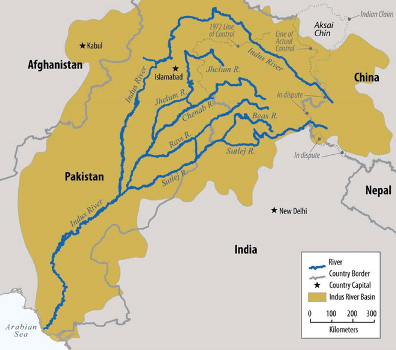
New Picture (1)


Fig : Major Tributaries of Indus River*
(Source: http://www.eaglespeak.us/2011/12/india-and-pakistan-water-war-may-go.html)

(Note: The map is used only for depiction of the geography of the basin. It does not represent correct political boundaries of the region)

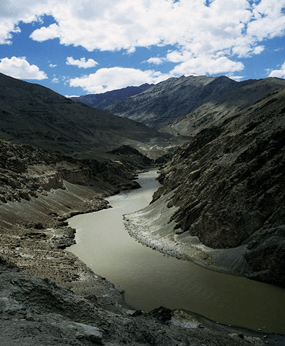
The Indus river system consists of the Indus River and its major tributaries that include Kabul, Kurram, Swat, Jhelum and Chenab rivers in the West and Ravi, Beas and Sutlej in the East. The Indus originates near the Manasarovar Lake and travels through Tibet before entering India in the South Eastern part of the state of Jammu and Kashmir. Thereafter, it passes through Pakistan occupied Kashmir and then Pakistan before finally draining into the Arabian Sea near Karachi.

Major Tributaries Governed by the Indus Water Treaty

Sutlej             Originates in Tibet near Mount Kailash and passes through the Panjal and Shiwalik ranges before entering the fertile plains of Indian Punjab. It thereafter flows into Pakistan. The Bhakra Dam and Husseiniwala Headworks at the merger of Beas and Sutlej are important construction works on the Indian side. In addition, the Harike Headwork is the feeder to the Rajasthan and Sirhind Canals in India.

Beas  This 467km long river originates near the Rohtang Pass in Himachal Pradesh, India, and flows through the Kullu Valley and the Shiwalik Range. The Pandoh Dam on this river diverts water to the Sutlej through the Beas-Sutlej Link.

Chenab         This river originates in the Kangra and Kullu districts in Himachal Pradesh, India. It is joined by the Bhaga and Chandra rivers near Kishtwar before entering the Indian state of Jammu and Kashmir. The Chenab River enters Sialkot area of Pakistan through the Pir Panjal Range.

Jhelum & Kishenganga (Called Neelum in Pakistan)           The Kishenganga originates in mountains South of Deosai  Plateau, north of the Kashmir Valley. It merges into the Jhelum near Muzaffarabad in Pakistan occupied Kashmir. The Jhelum itself originates in the Kashmir Valley and flows due West towards Pakistan occupied Kashmir.

Ravi    The Ravi River originates in Himachal Pradesh, India and merges into the Chanab in Pakistan. On the Indian side, the Ranjit Sagar Dam is the most important construction work on this river which is located at the confluence of Himachal Pradesh, Punjad and the J&K states of India. On the Pakistani side, the Ravi feeds the Upper Bari Doab Canal (UBDC) which is a major source of irrigatin for the North-Western part of Pakistani Punjab.

Genesis of the Dispute

Pre-Partition Dispute

  • The British developed an elaborate system of irrigation canals in the Indus basin in the 19th
  • Most of the canals were constructed in the provinces of Punjab and Sind. However, each province built its own works independently due to lack of an integrated approach. Due to a lack of storage facilities, competition for the run-of-river flow increased and led to a dispute between Sind and Punjab in the 1930s. Events leading to the partition obstructed any final settlement of the dispute.


Post Partition Escalation of the Dispute

  • Standstill Agreement Upon partition, India became the upper riparian in all five rivers of the Indus Water Basin in Punjab due to the location of headworks on the Indian side of the international boundary. The standstill agreement lapsed on 31 March 1948 and India stopped the water supply to Pakistan on 01 Apr 1948 due to nonpayment of revenue. This is considered to be the start point of the escalation of the dispute as it created a fear psychosis in the minds of Pakistan that India could hold Pakistan to ransom on the issue of water.
  • Delhi Agreement The two countries signed a temporary Inter Dominion Agreement (also called the Delhi Agreement) in May 1948 to maintain the pre-partition status quo n water sharing till resolution of the dispute over revenue payment. However, India and Pakistan failed to resolve the dispute at a bilateral level due to lack of trust and political will on account of hardened domestic opinions.
  • Stalemate Over Payment of Revenue by Pakistan Pakistan wanted to escalate the dispute by referring it to the International Court of Justice which was rejected by India. On 01 Nov 1949, Pakistan declared the Delhi Agreement to be null and void and stopped making revenue payments with effect from July 1950. However, India continued to supply water to Pakistan without any disruption.

The Negotiation Process

Involvement of the World Bank            India and Pakistan had both applied for loans from the World Bank for development of works on the disputed waters of Sutlej, which were initially rejected. Later, the World Bank President, Eugene R. Black visited India and Pakistan and proposed the formation of a joint working group of engineers from India, Pakistan and the World Bank. He was of the view that the issue of sharing / division of water should be treated from a ‘functional’, rather than a political perspective.

Difference of Approach Between India and Pakistan          India wanted to use the water flowing through its territory to develop its own irrigation network. Pakistan was concerned about the resultant damage to its existing usage and the need to ensure uninterrupted supply of water for agriculture. As the negotiations were not making any headway, the World Bank put forward its own settlement proposals in Feb 1954, offering the three Eastern Rivers to India and the three Western Rivers to Pakistan.

The World Bank Plan        Under the proposed plan, Pakistan had to construct replacement works to channelize the waters of the western rivers to compensate for the loss of waters of the eastern rivers. The World Bank proposed that India should bear the cost of replacement works in Pakistan. While Pakistan wanted the Indian financial liability to cover the cost of all transfer works as well as developmental works, the huge financial liability of USD 1.2Billion was not acceptable to India. The World Bank President then proposed a solution as per which, India was required to pay a fixed sum of £62.060Million in ten equal yearly installments while the Bank would raise additional funds for Pakistan with the help of Western donor countries. The donors pledged an additional $900Million, clearing the way for the conclusion of the treaty.

Signing of the Treaty                    The treaty was signed in Karachi between the Indian Prime Minister Pandit Jawaharlal Nehru and the Pakistani President Field Marshal Ayub Khan, along with the World Bank President W.A.B Illif, in September 1960. It was deemed effective from 01 Apr 1960 but was only ratified by the two governments later in January 1961.

Salient Features of the Treaty

The complete text of the IWT can be downloaded from the World Bank site. The url for accessing the same is as under:-

Click to access IndusWatersTreaty1960.pdf


Some salient features of the treaty are enumerated below.

Eastern Rivers        Sutlej, Beas and Ravi would be available for unrestricted use by India. Certain agricultural uses are allowed to Pakistan under the provisions of Annexure B of the treaty.

Western Rivers       Indus, Jhelum and Chenab would be available largely t opakistan except for the following limited and specified use by India:-

  • Domestic use.
  • Non consumptive use.
  • Agricultural Use India is permitted to draw from the Western rivers, water for irrigating 642,000 acres as per the existing usage on the day of signing of the treaty. In addition, the treaty also entitles India and additional area of 701,000 acres in the basins of the three Western rivers for irrigation as it would develop post the signing of the treaty.
  • Generation of hydroelectric power as run of river projects.
  • Storage Permitted to India on Western Rivers The quantum of storage allowed by India has been laid down in quantified terms for each Western river under the following heads:-
  • General Storage For all purposes, including generation of electricity.
  • Power Storage The treaty allows use of power storage water for other domestic purposes except for flood control and protection. Also, the storage capacity on Chenab can be adjusted by decreasing or increasing corresponding quantity in Jhelum or Chenab main.
  • Flood storage.
  • Waters in Western rivers can be diverted by India with the condition that the same is restored to the river within a week.
  • India is required to seek concurrence of project design from Pakistan if it undertakes any project on any of the three Western rivers.


Transition Period (10 years from the signing of the Treaty)

            Pakistan authorized to undertake replacement works on Western rivers in lieu of the loss of waters from the Eastern Rivers.

            Pakistan was to receive uninterrupted supply of water from Eastern rivers during the transition period.

            India was to contribute 62 million pounds in ten equal installments towards the construction of diversion and replacement works by Pakistan.

Permanent Indus Commission (PIC)

One commissioner each from India and Pakistan heads the PIC. The commissioner should be an engineer with competence in hydrology. The PIC should meet at least once annually (alternatively in each country) and submit a report to their governments by 30th June each year. The commissioners will be treated as official representatives of their governments for all issues related to the IWT.

Exchange of Data

The treaty lays down a mechanism for regular exchange of data regarding the flow and utilization of waters of the rivers through the meetings of the PIC.

Dispute Settlement Mechanism

            Disputes or disagreements on the interpretation of the IWT provisions have been classified into separate categories i.e. questions, differences and disputes, which are described as under:-

  • Any question on an issue alleged to be a violation or breach of the Treaty will be examined and analysed by the PIC first.
  • If the PIC fails to reach an agreement, a difference is deemed to have arisen.
  • A neutral expert appointed by the two governments in consultation, or by the World Bank in case of a lack of consensus will decide whether a dispute exists or not. The decision of the neutral expert will be binding on both the parties.
  • If a dispute is established, the commissioners report the same to their governments for resolution.
  • If the governments cannot reach an agreement or decision, they will initiate proceedings for setting up of a court of arbitration. Detailed composition and procedure for the court of arbitration are laid down in the treaty.

Guidelines for future cooperation between India and Pakistan on the development of the Indus river basin are also included in the treaty.

There is no exit clause in the treaty and it can only be terminated / replaced by another treaty.


Analysis of the Causative Factors

Water Rationality   this concept expects cooperation between co-riparians since neither conflict nor war can achieve any sustainable and practical water security. Water security can only be achieved by good water management practices at national as well as international levels. This theory stipulates that fresh water is so crucial that co-riparians will cooperate despite their political differences and animosity. India and Pakistan did attempt to resolve their water sharing dispute through bilateral negotiations but the discussions reached a stalemate due to lack of trust and accommodative spirit. Accepting the World Bank’s good offices was, therefore, a rational act by both the countries as they continued to find ways to cooperate.

Role of the World Bank    Given the inimical and belligerent attitude of India and Pakistan, the mediation by the World Bank acted as a facilitator for continued engagement and negotiations. The World Bank was able to leverage its position as the principal financer to both nations in taking the negotiations ahead. In addition, mid course correction by the World Bank proposing division of rivers rather than joint development was able to break the deadlock created due to differing positions of India and Pakistan on the sharing of the waters.

International Involvement and Contribution               Intervention by the USA and other developed countries by the way of supporting the World Bank efforts for settlement of the dispute gave the necessary impetus to the negotiation process. In addition, financial contributions by international donors to the Indus Basin Development Fund was an important pre-requisite for the treaty as India and Pakistan were not in a position to bear the huge cost of replacement and development works involved.
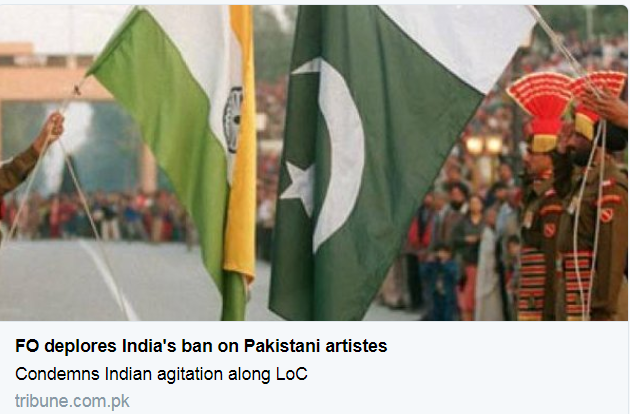


On Banning Pakistani Artists from Indian Movie Industry

Capture.PNG

FO deplores India’s ban on Pakistani artistes

So this landed up on my TL some time back – About Paki artists no longer being welcome in Bollywood, prompting me to share some thoughts on the subject that were first tweeted about two and a half years ago. Here goes ..

With the Pakistani State apparatus actively fomenting / sponsoring terror inside India, each and every Pakistani citizen paying tax to his Govt in whichever form, is actually enabling it kill Indian soldiers and civilians.

The State support for terror is blatant. At times it is apparent for all to see as in Punjab Govt budget catering money for Hafiz Saeed’s JuD. (Pakistan’s Punjab Government allocates funds for JuD centre)

Other times too it is quite apparent, esp when a retired Terroristani Army Chief boasts about it. This specimen refers to use of terrorists as ‘the asymmetric war led by men with high motivation’. Very clever, I’d say! (DEVISING A ROBUST DEFENCE POLICY: Mirza Aslam Beg)

Since terror is a State policy of the Islamic Republic of The Land of the Pure, I’d rather constrict the resources available to them to do so, or at the very least, try not to add to the funds available for them to do so. A Ghulam Ali, talented as he might be, making money off you and me will pump most of it in Pakistani economy, ultimately putting it to use to kill my countrymen.

And then someone like Rahat Fateh Ali Khan would go a step further, choosing to smuggle it out in cash without even paying the mandatory Indian taxes! (Rahat Fateh Ali Khan stopped at IGI airport with cash in baggage)

Same goes for cricket. A Sohail Tanveer would be happy to make money in IPL, and when denied a chance to do so after the Mumbai terror chooses to blame the Hindu mentality for refusing to deny him his ‘haq’ instead. Also note how the anchor too chips in with a ‘Muh Mein Raam Raam Bagal Mein Chhuri’.


Hindu Hatred is second nature out there.

Period.

At the end of the day, ‘Art has no Boundaries’ is a universal truth which I too endorse, but to say that you make money off me and use it to try and kill me, is something I’d be an idiot to endorse. Simply for this reason, I am all for chucking out terror sponsoring Pakistani artists / sportsmen.

JMTs

Btw, here’s some more food for thought – Impose a Terror Tax on Pak Cricketers


On Ravi River Waters Flowing Unchecked into Pakistan

Project for better use of water of rivers flowing into Pakistan

    I just came across this above report on the www. Instantly reminded of a thread first tweeted in June 2015 about Ravi River waters flowing untapped into Pakistan. Here it is!

Ravi River waters belong to India as per Indus Water Treaty, yet the last headwork to divert waters of this river that India has is at Madhopur (near Kathua), a cool 126 km as the crow flies from the point where the river finally flows out of India near Lahore!

    All the water that flows into the river after that, and the water that cannot be retained upstream of the headworks is allowed to flow into Pakistan without any check!

    Is there no place in between where water can be diverted to the existing canal system?

    One possible method is to increase the capacity of the canal linking the Ravi at Madhopur Headwork to Beas near Mukerian.

    Beas waters ultimately drain into the Harike Barrage South-West of Kapurthala, from where part of the canal system feeding Rajasthan originates.

    The waters from Madhopur, instead of flowing into Pakistan, can thus be diverted to Rajasthan.

    Catchment downstream of Madhopur needs another solution. The river flows very close to existing canals and natural drains.

    A link from the river to these, or perhaps a new canal altogether, akin to Ichhogil which served as a barrier opposite Lahore in 1965 could serve a dual purpose – utilize your allotted waters to add another defensive barrier in Punjab, at the same time augmenting supplies to Rajasthan as this canal flows Westwards of Amritsar and joins up subsequently with the canal system originating from Harike. Why the eff should these waters irrigate the fields of the jihadi hotbed of southern areas of Pakistani Punjab, instead of my own lands?

The Story Of Hakeekat Rai

Ca_rMhJVAAEhv1k.jpg


    While we revel in festivities today, let us spare a moment for to remember a young teenage boy, Hakeekat Rai who chose to embrace death instead of leaving his faith and converting to Islam.

    Hakeekat Rai was the only son of a rich man, Bhagmal Khatri of Sialkot. He became a Sikh under the influence of his mother. During Mughal rule, kids went to study Persian from Maulvis. Hakeekat Rai also did so.

    He was the only Sikh in a class full of Muslim students.

    One day when the Maulvi had gone out, he got into an altercation with them after they insulted the Hindu Mother Goddess. He retaliated, calling names to Fatima.

    After thrashing him, his classmates complained to the Maulvi that Hakeekat had  committed blasphemy.

    Hakeekat Rai got arrested and the administrator of Sialkot declared that he either convert to Islam or face death. Yes, that was the ‘choice’ offered to a young teenaged lad by the bigots that ruled these sacred lands at that point of time.

    The case was then transferred to the court of Governor of Lahore. The Governor, Zakaria Khan, upheld the sentence and beseeched him to convert for sake of his life.

   The young Hakeekat Rai asked, “Shall I never die, if I become a Muslim?”

    When Zakaria Khan replied in negative, he said, “If this be the case, then why should I sacrifice my great religion for the sake of Islam?”

    That night his parents came to meet him and his mother, Goran said to her son, “No doubt I shall lose a son by your death but if you give up your faith, I shall be called the mother of a deserter and a faithless son. I pray to God to bestow upon you the will to keep your faith even if you have to sacrifice your life.”

    Next day he was again brought to court and asked to convert. The young lad stood firm in his decision. He was finally ordered to be handed over to the Mullahs to be punished as per Sharia.

    The boy was buried upto his waist in the earth. He still retained a smile on his face. The fanatical crowd then started throwing stones at him. Death finally came when a soldier decapitated him.

    It was the day of .

 Ca_2jFZVIAEUGM6

  Subsequently, a samadhi was built at the spot of his martyrdom. Till the time the nation was partitioned, Hindus / Sikhs from all over Punjab would gather there to pay their respects to the teenaged ‘Dharamveer’ on his martyrdom day.

Ca_21-WUkAAWQjn.jpg

    And then some people say the ISIS is a recent phenomenon .. History might beg to differ a bit, though.

    Incidentally, part of the reason why many in Pakistan seek to curtail celebrations is that according to them, it glorifies victory of a young child over their faith, Islam.

    God bless the soul of Hakeekat Rai & countless like him that have fallen in this long running war on the very soul of Indian civilization.

    Jai Hind

Calling Pakistan’s Nuclear Bluff


Capture.PNG

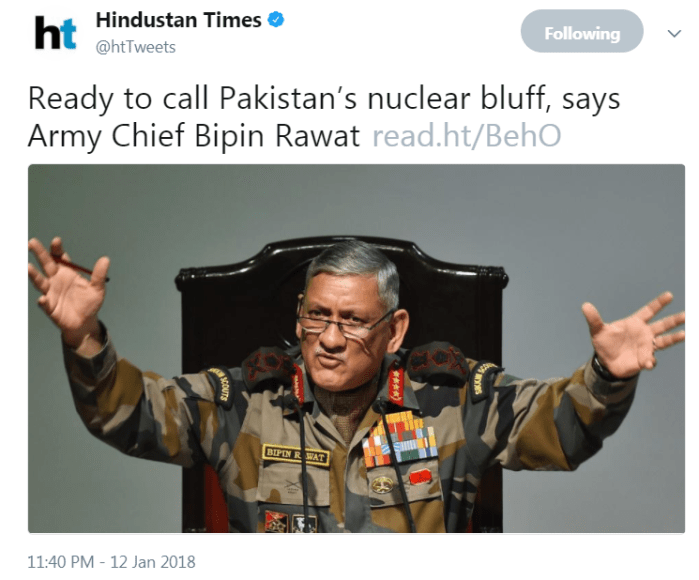
So this (LINK) is what the Chief said three days back, and it set a lot of knickers on fire, unsurprisingly, on BOTH sides of the border.

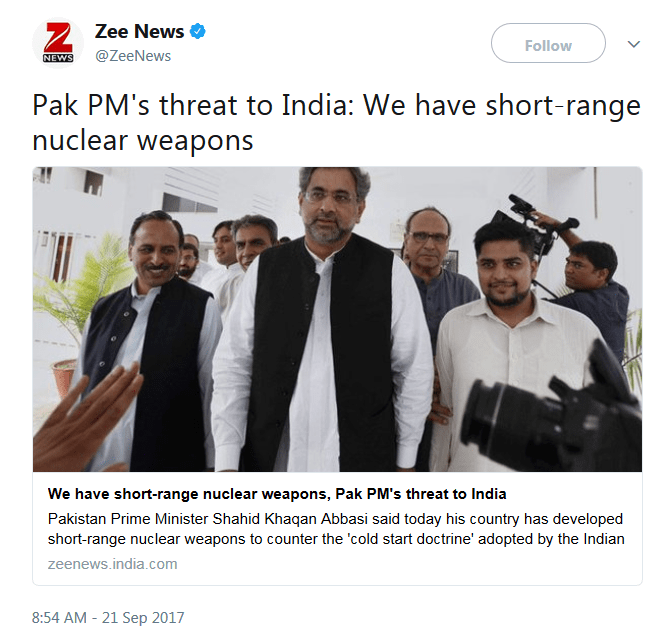
In light of this, just letting out some thoughts on calling Pakistan’s Tactical Nuke threat that I had tweeted some months ago.

There was a recent spate of statements from Pakistan, threatening pre-emptive use of tactical nukes against Indian forces even as they might be in their barracks / staging areas.

Capture.PNG

Firstly regarding the preferred delivery mode – the Nasr missile. With a diameter of just about 30cm,I find it laughable that Pakistan actually has a working bomb of such dimensions. I may be wrong out here, but would be willing to hedge my bets on this account due to the fact that they’ve not tested since 1998, and are working at best, on unproven designs.

Secondly, despite a stated first use policy, they’ve been silent on what constitutes their red lines. In case of a stand-off that might play out on lines of Op Parakram, wherein strike elements actually moved in close to borders, a pre-emptive use by a panicked field commander might lead to a bloody war instead.

Thirdly, in case a Pakistan justifies a pre-emptive strike on account of a threat in being of an Indian attack, can the same premise – an imminent nuclear strike, as proclaimed by Pak – not be used as a premise for a ‘pre-emptive retaliatory strike’ by India, as part of its NFU doctrine?

Fourthly, if Pakistan Army truly believes that even a dozen sub kiloton nukes can actually stop the might of Indian strike forces, they are going to be in for a rude shock. They know it too. And if they don’t, well explains it quite well in this video below

That brings us to the next question – ‘What Next?’

Stated Indian Nuclear Doctrine doesn’t differentiate between tactical nukes or any other type of nukes. Massive retaliation is the response that will visit them soon thereafter. Given a military machine which has such strong survival instincts that it is not beyond sacrificing its own pimps in AfPak & elsewhere, or even disown its own soldiers in Kargil, to expect Pak Army to risk its very existence is a fallacy.

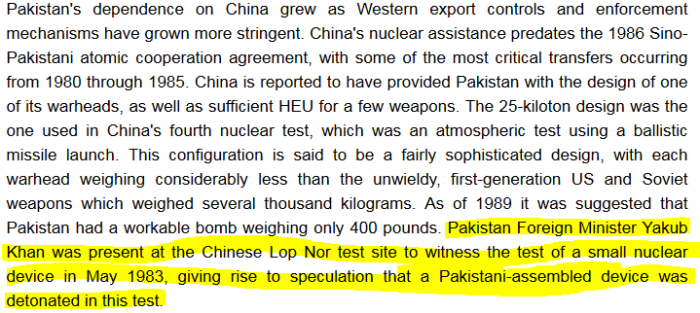
Lastly and most importantly, is the reqmt of making the sponsors of Pak nuclear pgme pay in case nukes gifted by them to Pak (Ref Lop Nor, May 1983 – Para 14 here: ). Here’s a screenshot from that, even though the entire report is a highly recommended read:-


Capture.PNG


Nothing fancy, but just an ‘innocent’ statement to this effect by one of the many semi-govt ‘loudmouths’ in reply to such statements from Pak would surely raise hackles in a LOT of world capitals. Given blatant nuclear proliferation in arming their cat’s paw, they too deserve ‘some’ anxiety atleast, given that India is forced to live with a nuclear armed mad man at its doors.

Talking about ‘Cat’s Paws’, had put out a BLOG post some days back about China engaging Indian security apparatus by its hired lackeys. May have a look.

But coming back to the topic at hand, once we have atleast a half dozen or so Arihant class boats prowling the seas with an assured second/third strike package, perhaps then the nuke benefactors will feel some bit of ‘anxiety’ that I talked about earlier.

Bottomline – Nuclear sabre rattling is just like riding a tiger. Nukes are NOT to be used in a war, unless it is the ‘very last’ war this world sees. Don’t do it. Tomorrow a rabid, brainwashed population may not leave you with a way out. Then you will have no where to hide.

Period.

JMTs

(Oh, and talking about ‘brainwashed population’, THIS three part blog series chronicles some interesting facts).


On Cdr Kulbhushan Jadhav’s Meeting With His Family

Sharing some thoughts on the treatment meted out to Cdr Kulbhushan Jadhav’s wife and mother by Pakis, in what could easily have been a show of goodwill instead.

Firstly let us recount what exactly happened.
(a) Forced removal of any Hindu symbols – choori, sindoor and mangalsutra.

(b) Forced to change clothes.

(c) Glass partition, ensuring physical separation, as if they would have otherwise blown up the building

(d) Chappal Chori

(e) Forced not to converse in their mother tongue

(f) Repeated interruptions while the mother was talking to him

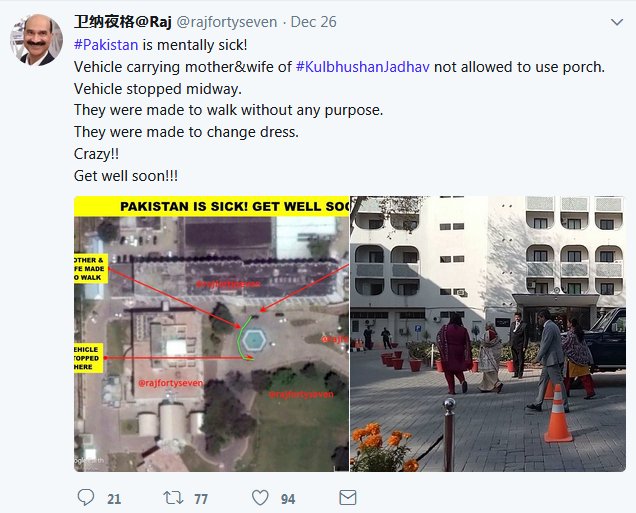
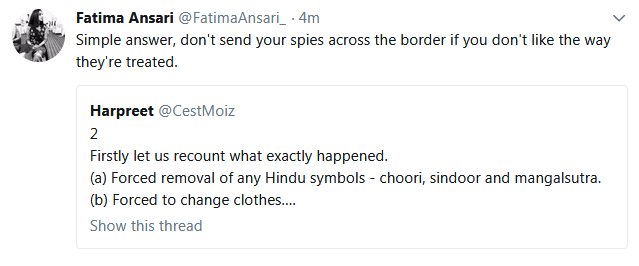
(g) While approaching the site, being forced to disembark before the entrance and unnecessarily walk rest of the distance (refer screenshot of tweet)


DSDiE62U8AEdJGX.jpg

(h) Meeting commenced without presence of the Indian Deputy High Commissioner, who had to fight his way in.

(i) And the media. Who can forget the Paki media and their ‘questioning’ of the visitors? (Refer THIS tweet).

Btw, this was despite an agreement that media won’t be allowed close access to the visitors. Now comes the question, how does one view this. My TL has been abuzz with this since yesterday.

As far as my reaction goes, yes I am outraged too.

Outraged, yes.

But surprised? No.

In fact, on the contrary, I would have been (pleasantly) surprised had the Paki security establishment allowed the visit to go in a dignified manner. But that is too much to ask of them. And they didn’t disappoint me either.

Now the question is, where does this insane hostility come from. Of course, they will cry hoarse at ‘Big, Bad India’. I’ll not argue with that since they are welcome to their own point of view.

Over here I’ll just go into why the behaviour towards the two ladies

There was amazing similarity in which the establishment went about conducting the visit, and the media doing its own bit. This is an interesting phenomenon indeed – the way the Paki state brings up its children to adulthood, fed on a potent propaganda right from the word go.

But first let us see how it manifests itself. Here are some public personalities, those that are supposed to be exposed to media and experienced in handling themselves in public.

Example 1: Shahid Afridi.(WSJ Article   Afridi: Indians have smaller hearts than Pakistanis)

Quote, ‘If I speak truthfully, they just can’t have the kind of heart a Muslim has or a Pakistani has. I think they don’t have the sort of big hearts, pure hearts, Allah has given us.’

Btw, this is the same Afridi one of whose cousins was dispatched by the BSF in Kashmir in 2003 (LINK)
 
Then there was another international cricketer, Shri Sohail Tanveer and his reasoning at not being selected for IPL in 2009 – Hinduon Ki Zehniyat Hi Aisi Hai
The small issue of Mumbai Terror Attack didn’t figure, though!
What is interesting in the above video is not merely the choice of words by Tanveer, but the wholehearted endorsement by the female anchor and the subsequent question by the journo – ‘Didn’t you know about Hindu Baniya – Muh Men Raam Raam Bagal Mein Chhuri?’
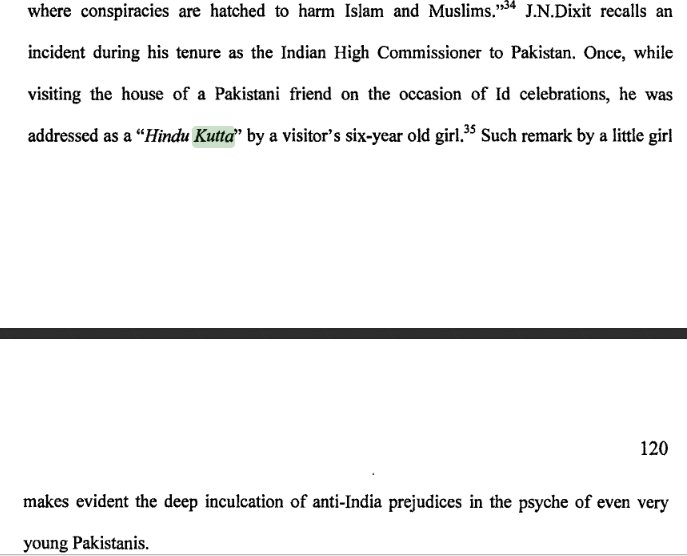
Moving on, here is a Paki comedy show where the word ‘Hindu Kutta’ not only comes out matter of factly but also elicits a wholehearted laughter from the audience
And if you think that the ‘Hindu Kutta’ thing is a one off event in a comedy show, you couldn’t be more mistaken! Late JN Dixit, during his tenure in the Indian High Commission in Pakistan was given a live demonstration, that too by a six year old child!
DSDugLmVAAImt5s.jpg

Here’s the source of the above screenshot:

A six year old child.
Let that sink in a bit.
A kid of someone definitely high up in the Paki establishment / society.

A kid not yet old enough to make her own opinions.

A kid with her mind poisoned by her parents

We talk about madrassas as incubators of hate, right?
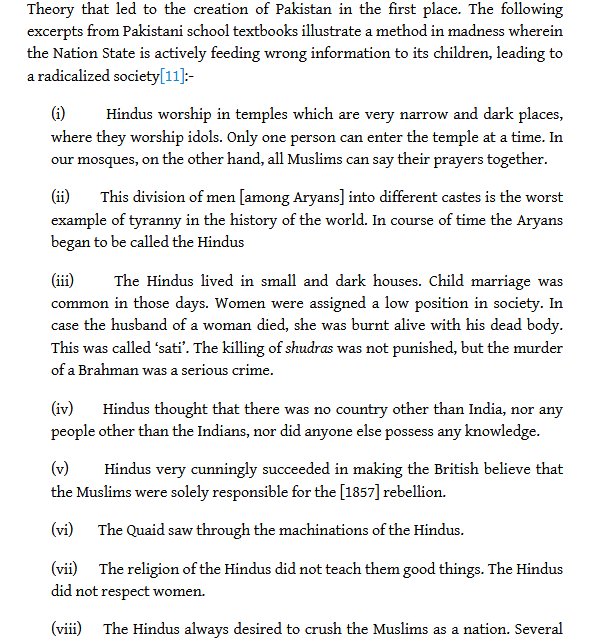
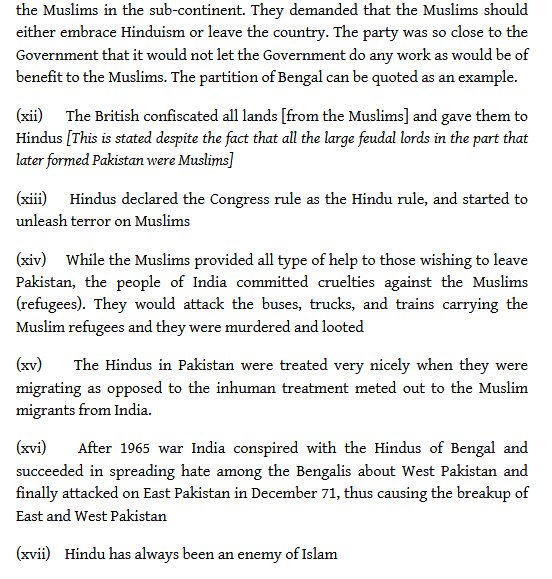
Here is what the state sanctioned school curriculum teaches little children in Pakistan.
These are a couple screenshots from the blog post linked above.
DSD1Q4jVQAAR0Oe.jpg
DSD1ZUWVwAI_Cbf.jpg

Last two points in the above list beg a closer scrutiny.

Point 17: Hindu has always been an enemy of Islam.

I think the previous 19 tweets have enough examples of how it manifests in the current Paki discourse. And no, it is not just a fringe that holds this point of view. Those that think so are being ostriches. It is how the Pakistani state brings up its children.

In fact, in 2004 the Information Minister of the Govt of Pakistan was forced to apologise to the religious parties in the National Assembly after the Education Minister questioned the relevance of verses glorifying Jihad in Class XI Biology textbooks! (LINK)

Coming back to the screenshots in tweet number 20 above.
Point number 16: After 1965 war India conspired with the Hindus of Bengal & succeeded in spreading hate among the Bengalis about West Pakistan and finally attacked East Pakistan in Dec 71, thus causing the breakup of East and West Pakistan.
Very cute, I must say!
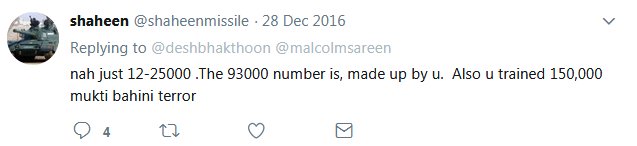
Propaganda by a defeated army to still justify its relevance in national discourse is understandable. But when that propaganda becomes the national discourse itself, this is what happens.
DSD568-UIAACoC6
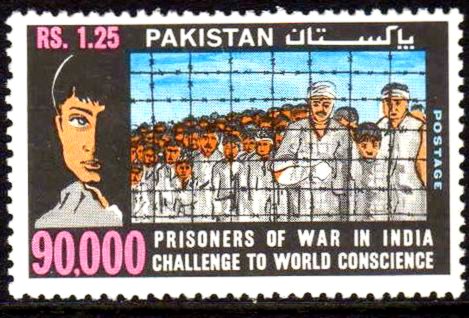
Can one really blame this person for saying what he says? And this despite his OWN govt releasing a stamp with the figure of 93,000?
DSD6PmYV4AAbIX1
DSD7CVOVQAAyB3Z.jpg
At some level, one does find sympathy for this one being brought up in an environment that hides the truth and works up the hatred inside him in order to shirk it’s own failures.
But sympathy won’t work because we are too far down the road of lies and hatred.
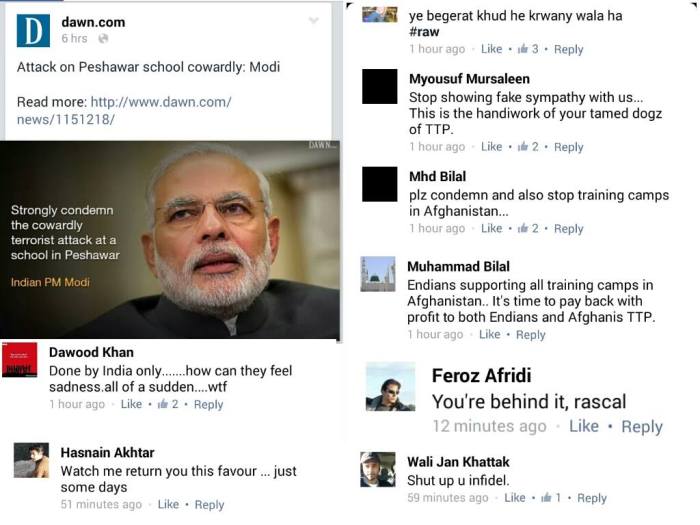
Here’s just one example of this dysfunctional state – An dastardly attack on school children, owned up by a local terror outfit.
But no, it was India that did it!
DSD8f_OVQAANOKw.jpg
No introspection needed when such a convenient enemy is available.
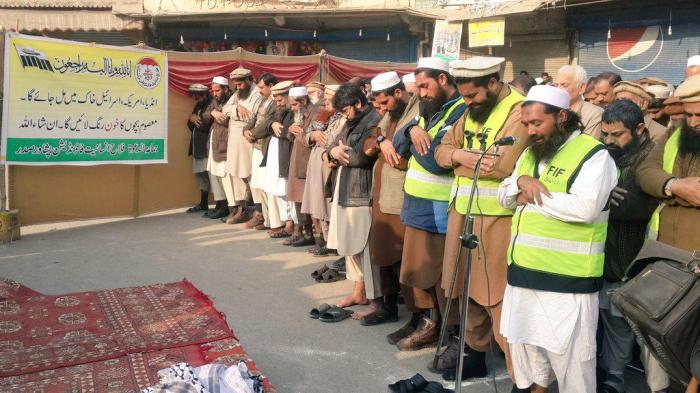
This poster in the funeral prayer for the children says ‘The blood of children will result in fall of India, US, Israel’
Well, then, all the best to you, I say.
DSD9Ir7V4AA0apR.jpg
A word about the all powerful army that has ruled Pakistan very nearly since its inception. People tend to say, that the army is the only bastion left that is preventing a fall of a nuclear armed Pakistan into chaos.
I’d beg to differ a bit
It is the fauj that has led Pakistan down the abyss it stares at today. Sane minds in the Khakis, you said? Just read this piece
The Brigadier in question had direct access to PM Benazir Bhutto.
Here’s a quote from the Brigadier – “We should fire at them and take out a few of their cities—Delhi, Bombay, Calcutta,” he said. “They should fire back and take Karachi and Lahore. Kill off a hundred or two hundred million people…….”
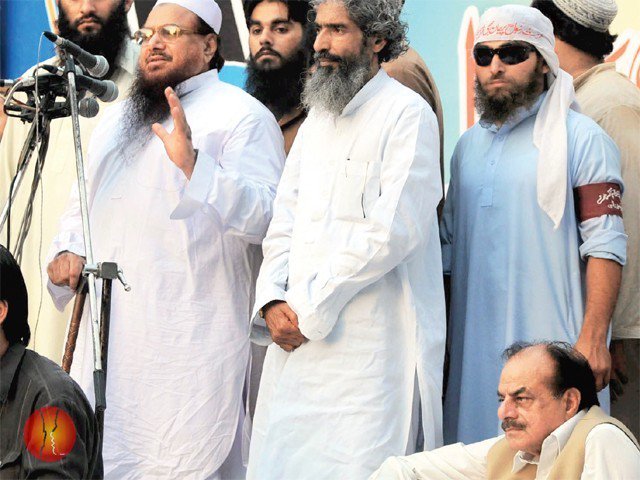
Some more on the ‘sane’ minds of the Paki Fauj. Here’s a snap of former DG ISI, Lt Gen Hamid Gul sharing a stage with Hafiz Saeed
’nuff said!
DSD_uE6VQAArVP_.jpg
With ppl like these virtually running the country, can one really blame its common folks for their particular world view?
Everything is justified by ‘Indian Terror’.
No going into details, not questioning anyone.
One word answer – Indian Terror!

DSEAzX-VAAU-z6t


DSEA1AIVwAAUWDM


Lastly, a word about the so called Track II intellectuals.


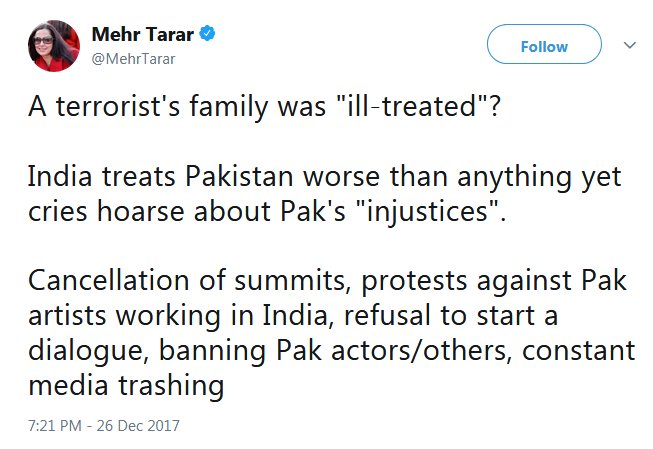
Here is one sample. The question of “ill treatment” (note the double quotes) is easily brushed aside by ‘But India Also So Bad’.


This one justifies the humiliation of a wife and a mother by the diplomatic engagements and denial of the ‘god given right’ for Paki artists and sportspersons to make money off India and yet continue spewing venom!


DSEBm1kUQAAlUEU.jpg


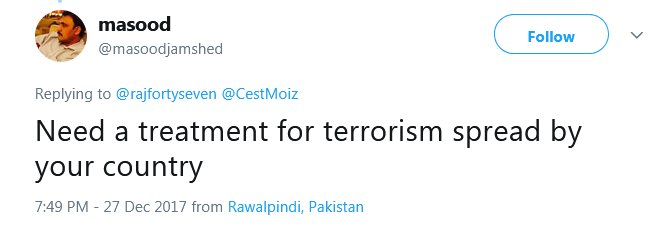
Btw, ‘s TL as on 27 Dec 17 has a very interesting conversation with her.


She is a ‘liberal’, by the way.


Oh, and talking about Paki artists / sportspersons, HERE is a short, 13 tweet thread on they mooching off Indian money and supporting terror inside India. Some very interesting data points in there.

Do Read

I insist again

In the end, I’ll repeat what I said earlier. Despite all their reluctance, this was a god given opportunity for the Paki establishment to come out as a bunch of pragmatic folks.

But like I said, I am not surprised that they made a complete spectacle of it instead.

Regarding Cdr Kulbhushan Jadhav, I will just repeat what I said some months ago.

Capture.PNG

I doubt he will breathe a free man again.

I’ll be glad if he does, but I doubt.

On Aurangzeb

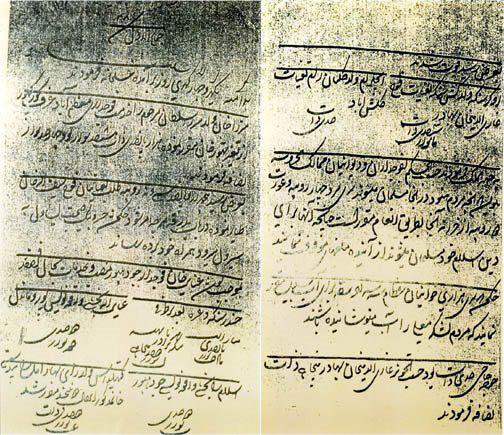
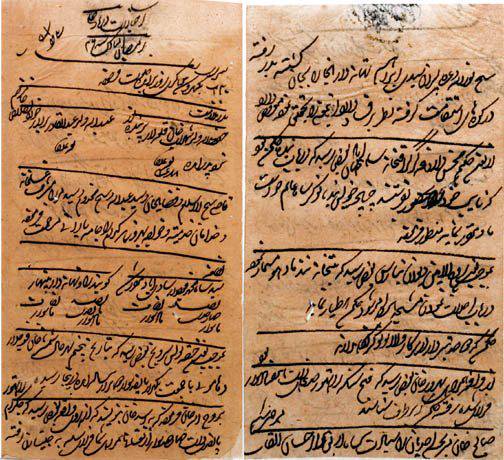
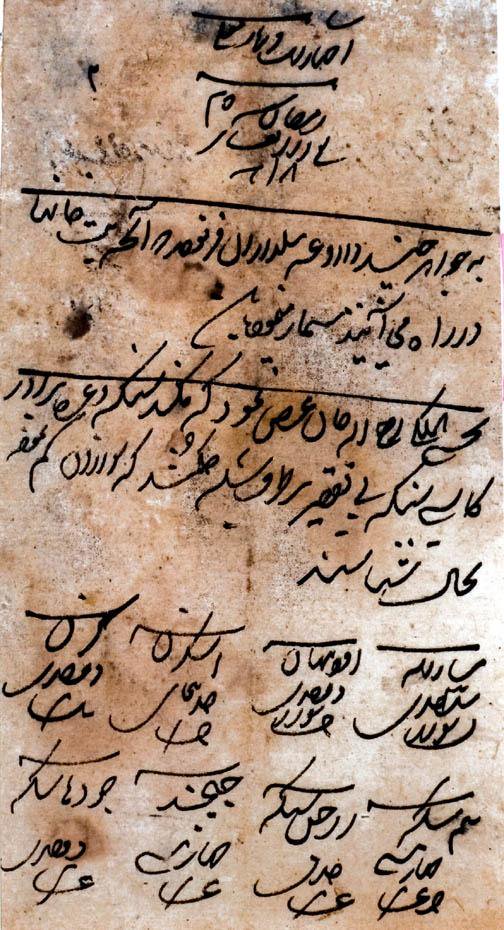
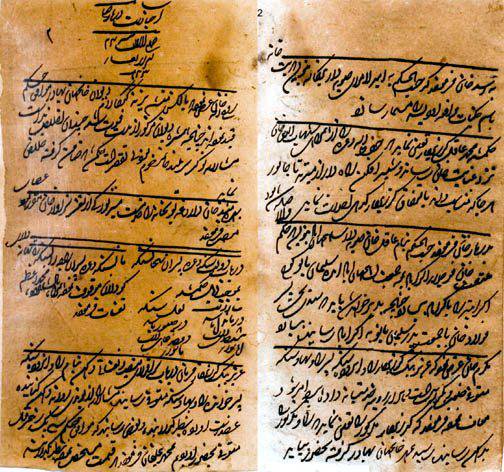
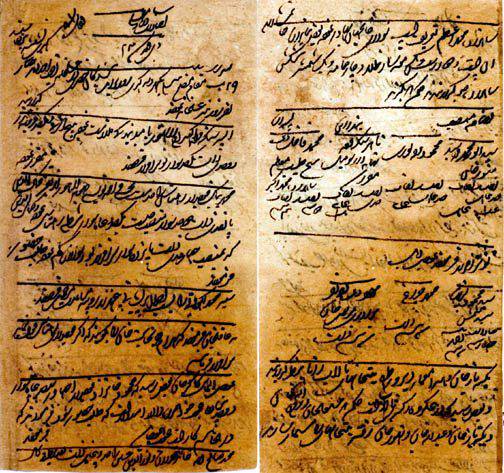
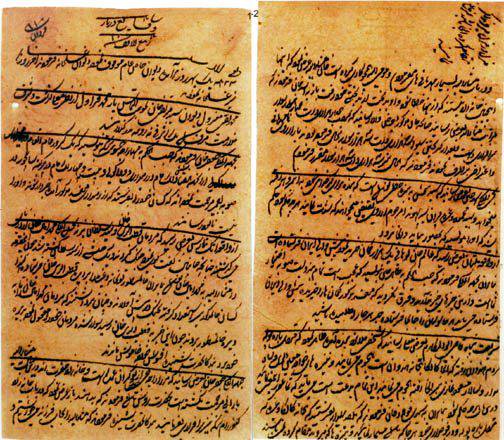
1. Firman issued by to convert Hindus. Rs 4 for a Hindu male Rs 2 for a female. Dated: 7 Apr 1685

CN1OS0cWwAEvElM.jpg


2. If Devi Chand, Zamindar of Manoharpur, who’s in prison, becomes Muslim, better for him. Else he be killed.

(Darbar Khan was ordered (by Aurangzeb) to send a parwanah to Ihatmam Khan, Kotwal of Garhvitli (at Ajmer) with above instructions)

CN1OS0cWwAEvElM.jpg


3. Shaikh Abdul Momin, Faujdar of Bithur, wrote he had converted 150 Hindus & had given them saropas and cash. ‘Go on giving them’, replied Aurangzeb

CN1OS0cWwAEvElM


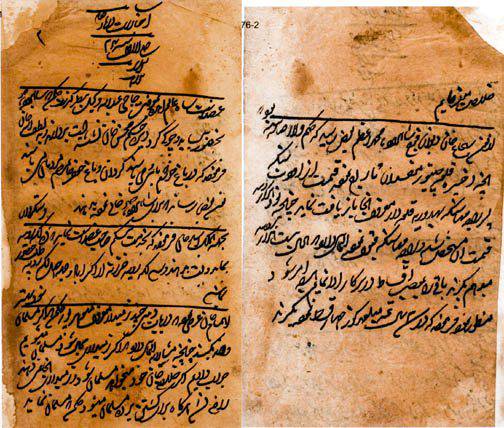
4. Aurangzeb’s order for demolishing the temple at Goner(Amber) Siyaha Akhbarat-i-Darbar-i-Mu’alla Julus, 28 Mar 1686.

CN1OS0cWwAEvElM.jpg


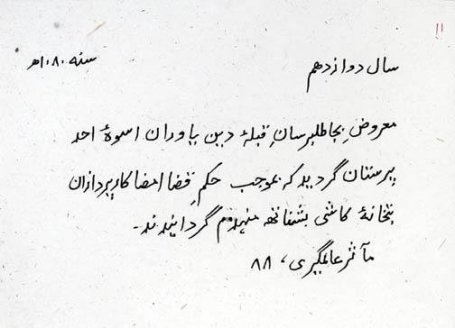
5. Demolition of Bindu-Madhav Temple at Banaras. Siyah Akhbarat-i-Darbar-i- Mu’alla Julus 26, Ramzan 20 / 13 Sep 1682

CN1OS0cWwAEvElM.jpg


6. Orders to Jawahar Chand, Daroga of the beldars, that whichever temples come in the way of the Emperor be demolished.

CN1OS0cWwAEvElM.jpg


7. Orders 4 demolition of Jagannath Temple, Orissa Siyah Akhbarat-i-Darbar-i-Mu’alla Julus 24,Jamadi I, 23 / 01 Jun1681

CN1OS0cWwAEvElM.jpg


8. Orders for the destruction of temples on the bank of Maharana’s lake, Udaipur. 23rd December 1679.

CN1OS0cWwAEvElM


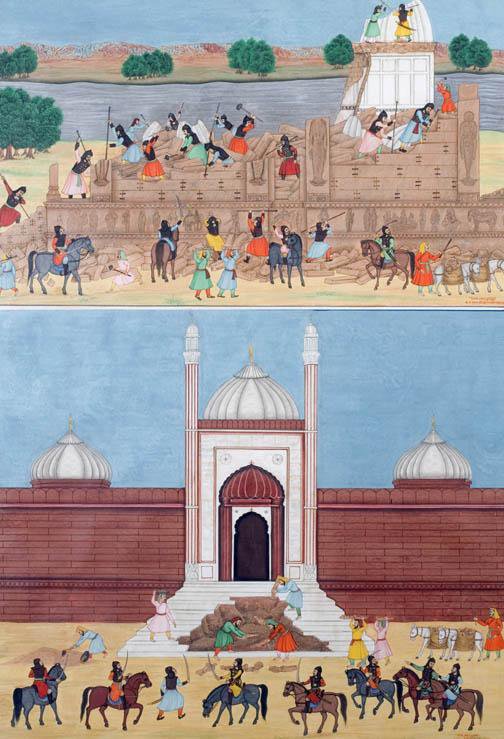
9. Painting: Demolition of Keshava Rai temple at Mathura. (13th January / 11th February 1670)

CN1OS0cWwAEvElM.jpg


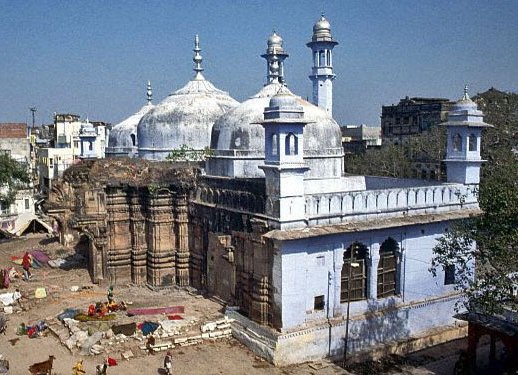
10. Proclamations of the demolition of the temple of Kashi Vishwanath (Banaras), August 1669 A.D. Gyanvapi Mosque stands there today

CN1OS0cWwAEvElM

CN1OS0cWwAEvElM.jpg


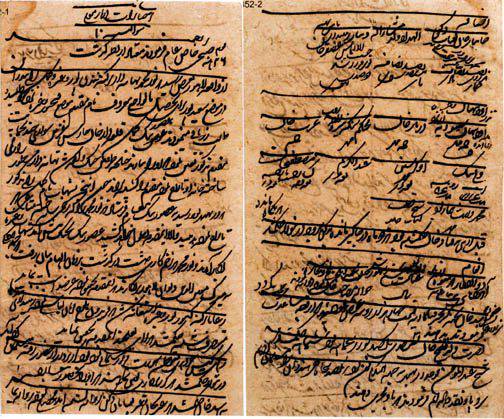
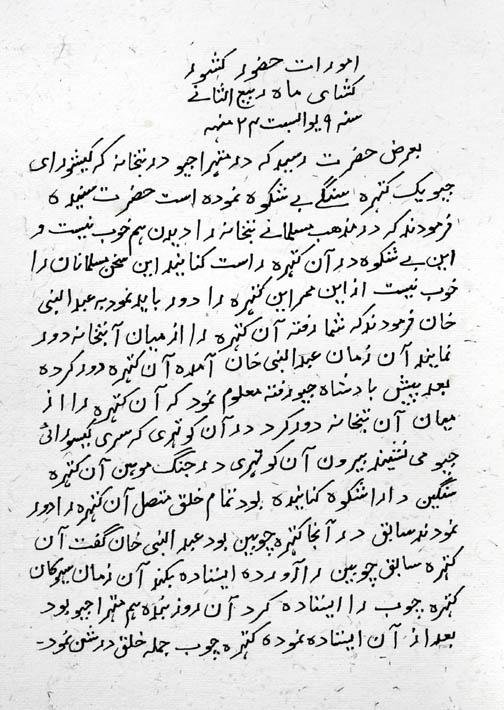
11. Even to look at a temple is a sin for a Musalman -Aurangzeb. Umurat-i-Hazur Kishwar-Kashai Julus / 13 Oct 1666

CN1OS0cWwAEvElM.jpg


12. Demolition of Kalka’s Temple near Delhi – I. Siyah Waqa’i- Darbar Regnal Year 10, Rabi I, 23 / 3 Sep 1667.

CN1OS0cWwAEvElM.jpg


13. General Order by Aurangzeb for the Destruction of Temples. (9th April 1669)

CN1OS0cWwAEvElM.jpg


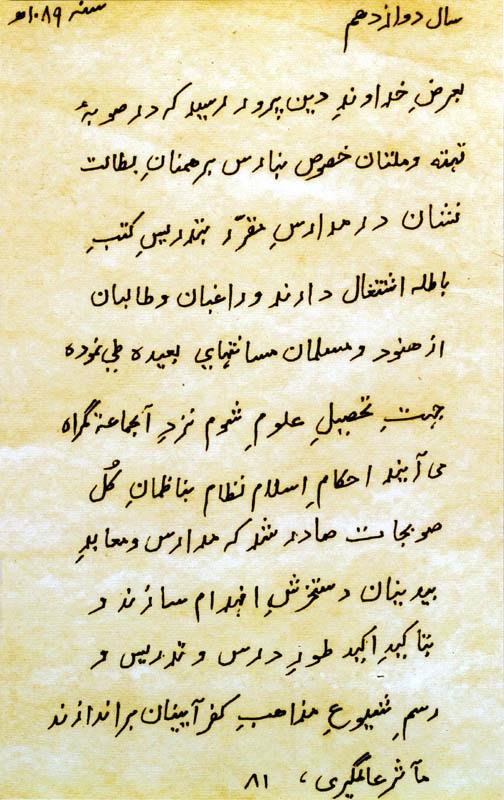
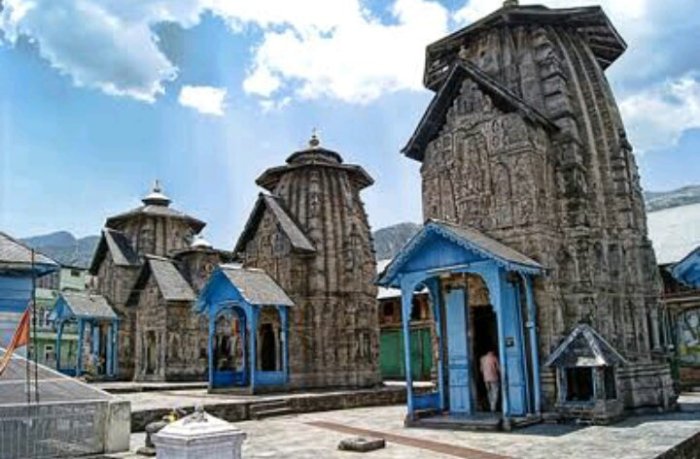
14. Aurangzeb also ordered to demolish 8-10 Century LaxmiNarayan temple in Chamba, HP. Temple museum still have the Farman from Aurangzeb.

CN1OS0cWwAEvElM.jpg


Sources

Serials 1-13:  aurangzeb.info

Serial 14: https://twitter.com/ChankyaBihar/status/929774657338773510

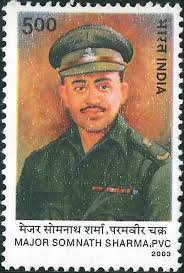
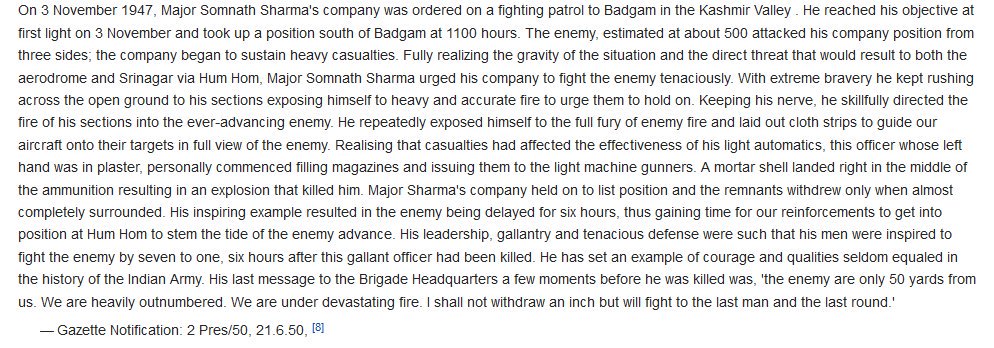
Maj Somnath Sharma, PVC (P) and The Battle of Badgam

CwVdjLFUsAA9Dzc

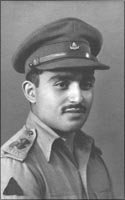
Maj Somnath Sharma, Param Vir Chakra (Posthumous)

    This man above became immortal this day in 1947. Recounting his last day alive in this blog post.

    Maj Somnath was a veteran of bitter battles in Arakan in WW2. His right arm was still in plaster due to a hockey injury.

CwVessuVEAAo6GO.jpg

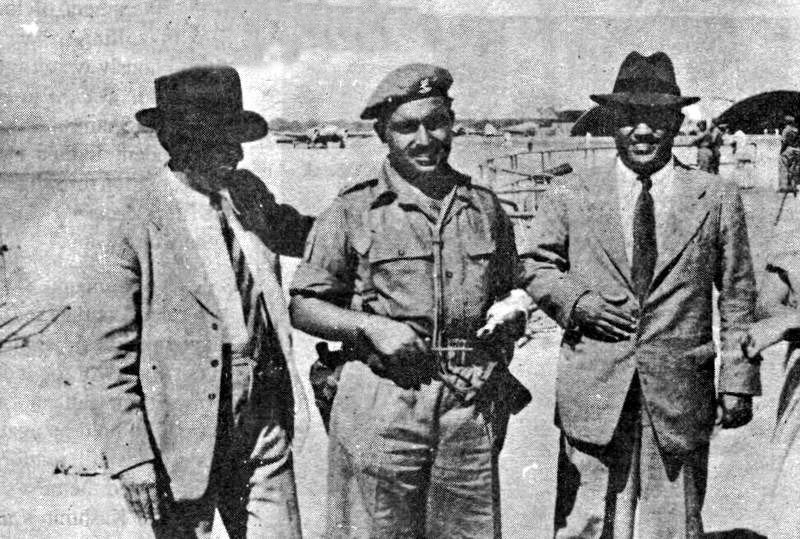
(Photograph: Maj Somnath Sharma at Srinagar Airfield. Possibly his last photo ever)

    Ignoring medical advice, he had bulldozed his way into joining his own Company as it flew into the Valley on 01 Nov 1947.

CwVfL3BUsAAzYYK.jpg


    At 0800Hr on 03 Nov 1947, Maj Somnath Sharma, 4 Kumaon & Capt Ronnie Wood, 1 Kumaon reported to HQ 161 Brigade to discuss the day’s patrol pgme. Consequent to the discussions, 2 Companies of 4 Kumaon moved out on a patrol towards Badgam, followed shortly by another company of 1 Kumaon.

    The Company of 1 Kumaon subsequently moved on towards Magam and thereafter returned to the airfield at about 1 pm. That done, Maj Somnath was also ordered to start thinning out. At 2pm, one Company of 4 Kumaon moved back. Maj Somnath reported that all was quiet with villagers going about their daily business.

    Little did he know that there was a huge force of raiders was gathering in the vicinity, trying to skirt the Pattan route blocked by 1 Sikh. Had the 2nd Company too moved back at 2pm, route to airfield would have been unguarded.

    Too bad for the enemy, it wasn’t so. At about 1430Hr, Maj Somnath reported that he was under ineffective, long range fire from ppl located in houses in Badgam Village but he wasn’t returning the fire for the fear of hurting innocent villagers.

    Suddenly, a large force appeared in front. A full scale frontal attack was now underway on his location, with the Kumaonis hugely outnumbered by the enemy. The firing from the houses in Badgam had just been a distraction as the main force of raiders built up on a different flank.

    A militarily brilliant plan, but for one small fact – The Kumaonis under Maj Somnath Sharma refused to play by their rules!

    The tenacious Kumaonis, under their gutsy leader, dug in and refused to cede any ground to their uninvited ‘guests’. An epic battle followed, upon which would hinge the fate of the entire campaign – If the raiders captured the airfield, all would be lost and the troops ahead would be outflanked.

    Upon the Kumaonis rested the fate of the Valley this day. And they rose to the occasion, ensuring that the airfield would NOT fall .. not this day, not on their watch in any case.

    Maj Somnath reported that he was engaging the enemy with all he had, but he was outnumbered & enemy was gaining ground. Even as automatics and mortars rained deadly fire on them & covered the advancing enemy, Somnath rallied his boys and they fought back like men possessed, inflicting serious casualties on the raiders, losing their own too, in the process.

    Soon 161 Brigade would receive his last transmission from battlefield, that would define the last stand of Maj Somnath Sharma. He radioed, “The enemy are only 50 yards from us. We are heavily outnumbered. We are under devastating fire. I shall not withdraw an inch but will fight to the last man & last round.”

    Immortal last words by the Paramveer who went down shortly thereafter.

    By the time the epic Battle of Badgam was over, less than 100 Kumaonis had held back nearly 700 raiders & saved the airfield. The Kumaonis lost 15 killed, including Maj Somnath Sharma and 26 wounded. One ammo truck too was looted by enemy but they failed their objective, losing many more than they killed.

    This was the closest they would get to the Airfield. EVER

    In evening, 1 Punjab moved double quick to take up more blocking positions to secure the airfield. Now at night, they waited. The airfield was still vulnerable. Another determined attack by the enemy, and it could still fall .. especially at night.
 
      Yet the enemy failed to make good this opportunity of a lifetime.
 
    Reason? Khurshid, the leader of that party was injured in the leg by a bullet. Leaderless, the Pathans dithered on further course of action.
 
    Ironically, Maj Somnath Sharma had saved the airfield not only in the afternoon, but at night too by leaving the raiders leaderless. So much so, that on return to Karachi, Khurshid – the leader of the raiders in that battle – stated that he’d run into an entire Indian Brigade and ROUTED it, when it was just one company of less than 100 troops that he’d encountered! A few months later, he died, possibly of the same wound.
 
    Atleast now he could reconcile the Indians’ strength with his Maker!
 
    Maj Somnath’s body was recovered after three days, once the situation had stabilized. Disfigured beyond recognition, it was identified by the few pages of the Bhagwad Gita that he always kept in his pocket & his empty pistol holster.
 
 
CwVs3RxVQAEsgbQ.jpg
 
  
  He had lived, and died by the code of the warrior. And claimed for himself the first Param Vir Chakra awarded by the Nation.
 
 
NDTV Thread
 
 
(Screenshot of Maj Somnath Sharma’s PVC Citation. Source: Wikipedia)


(The story of Maj Somnath Sharma, PVC (P), telecast in the 80s in the TV series ‘Param Vir Chakra’)

God bless him and his men that fell that afternoon of 1947.

Let their story never be forgotten.

Ever.

CwVz8JKVQAEZZsY.jpg

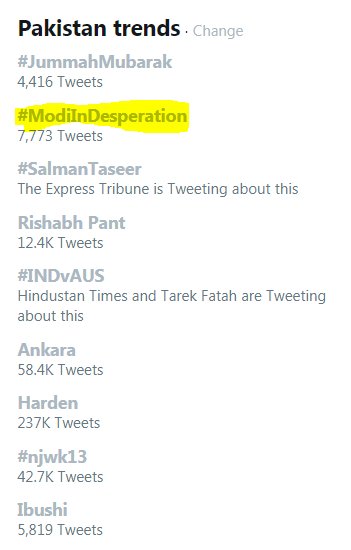
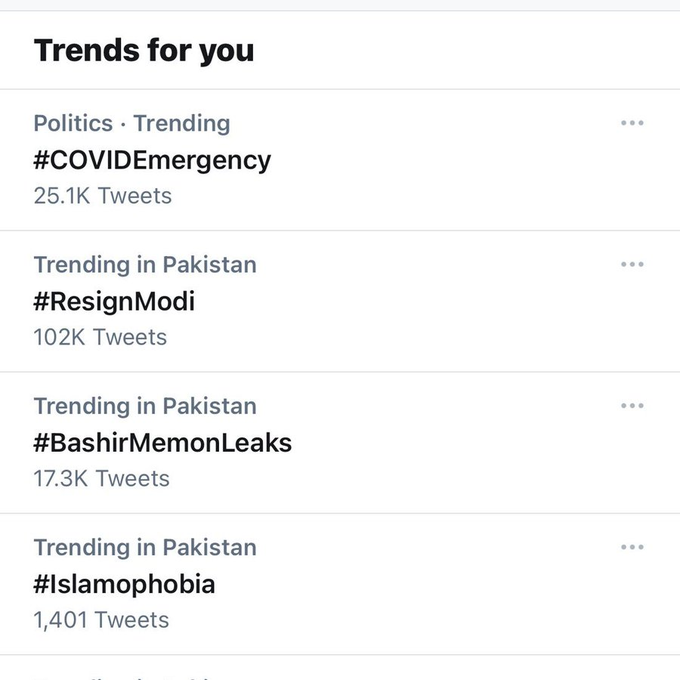
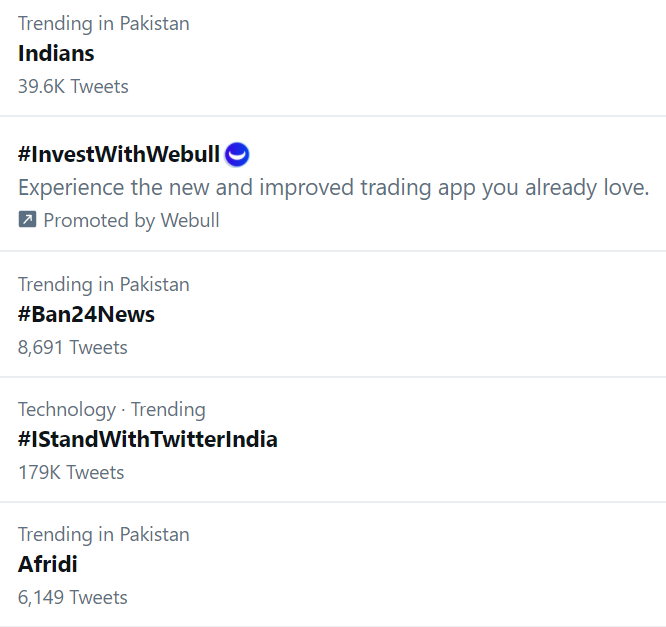
On Twitter Trends in Pakistan

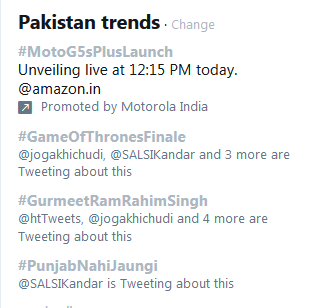
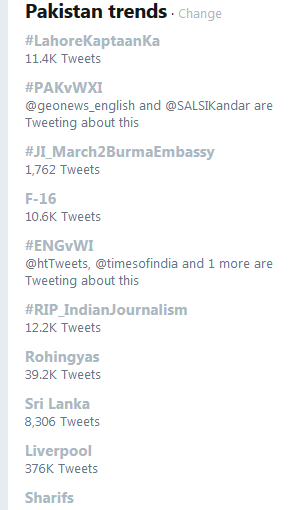
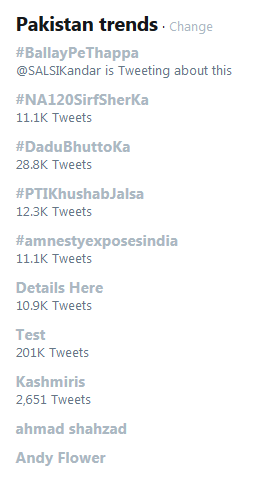
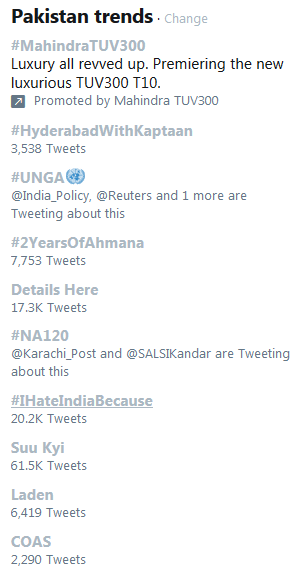
PakTrends.PNG

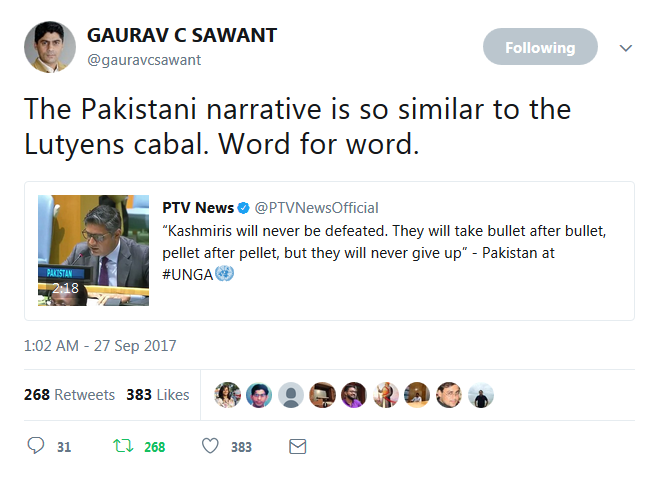
    So @gauravcsawant put out this above tweet some weeks ago. Something similar had been playing on my mind too for a while. Social media as a force came into its own in the 2014 general elections. And with that come the dirty tricks associated with influencing minds.

    Once again, I may be totally wrong out here, but it is a matter of what you want to believe Vs what you want to laugh away as a matter of someone’s fertile imagination. But here goes ..

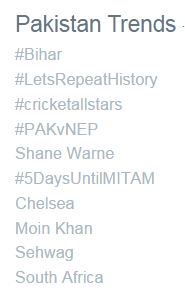
    I started putting default location for trends on my twitter profile as Pakistan some time ago, on a whim. What it has led to is quite a .. let me call it ‘fascinating’ observation every once in a while. The trigger was trending in Pakistan on 08 Nov 15, soon after Bihar Assembly Election results were announced.

paki trends 08 nov 15.jpg

    Interesting, no? Hashtags like and such likes keep popping up out there every once in a while. But ? Yes, , because the BJP / NDA lost and the left leaning media went into a celebratory frenzy!

    What one inferred from this was (strictly my personal opinion, btw) that atleast some of the so called ‘secular’ handles were based out of Pakistan, or had in fact, ‘outsourced’ some of the outrage industry over there. The next example came soon thereafter.

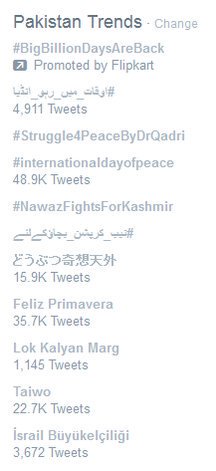
    Aurangzeb Road in Delhi was renamed, sparking another outrage from so called seculars. And ‘Lok Kalyan Marg’ trends in Pak!

C69FJ_9V0AAjc9A

    It took a while for subsequent examples since I was no longer looking. Next one came by in August 2017. Gurmeet Ram Rahim was arrested and much of Punjab – Haryana went into a tizzy. Social Media was up in arms against the government of the day, and right on cue, starts trending in Pak too!

Gurmeet Ram Rahim trending in Pak on 28-29 Aug 17

    Guess, Pakis too were quite ‘concerned’ about the law and order situation inside India, apparently! Or maybe they were just adding fuel to fire in perfect sync with the ‘secular’ ecosystem out here? Your call.

    Move ahead a week or so, and a journalist in Bangalore is murdered. Almost instantaneously, a call goes out in the secular media that it is the handiwork of ‘Hindu Terrorists’, some even creating fictitious Hindu groups that might have done it, and the social media world is on fire. Oh, btw ‘Gauri Lankesh’ also starts trending in Pak on 06 Sep!

    Coincidence!

06 Sep 17. 2130Hr

       I say coincidence because a country where journalism is one of the more ‘dangerous’ professions (‘More journalists killed in Pakistan than any other democracy’) is suddenly & overwhelmingly .’concerned’ about the murder of a journo in India! So much so that was again trending in Pak on 9 Sep!

09 Sep 2300Hr Gauri Lankesh Murder

    Fast forward another week, and Amnesty International releases its report on use of pellet guns by Indian forces in Kashmir.

    Remember pellet guns? And the ‘randi rona’ that seculars created because it was quite an effective crowd control tool to keep Pak sponsored stone pelters in check?

    Well, the same randi rona started again, this time on BOTH sides of the border!

    And soon was trending in Pak! Interestingly, the tweets associated were quite similar on both sides too!

17 sep 17 1338Hr On Pellet Guns

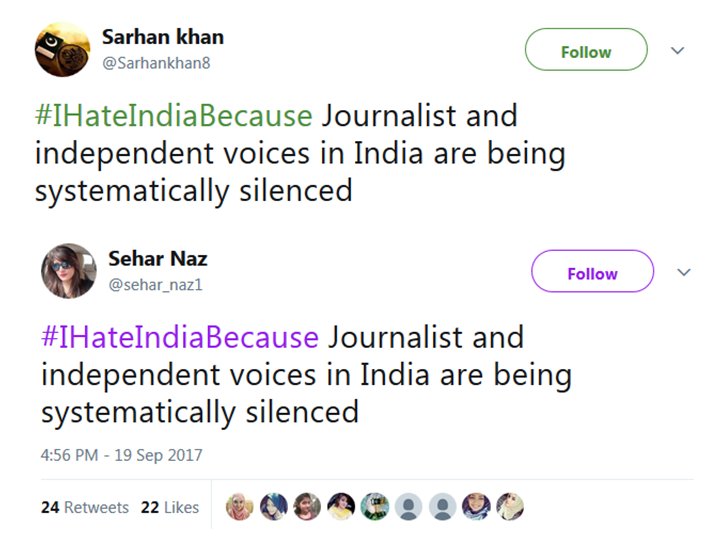
    Two days later came the hashtag. Quite normal actually, since such juvenile hashtags keep coming up every few weeks. Except that quite a bunch of tweets were STILL about the topics mentioned earlier in this blog post.

19 Sep 17 2134Hr.PNG

 DM09WquVAAA6AUy
    Point is, it might just be a flight of fancy that I have posted above, but then, I thought I might as well put it out here. Generally speaking, the Leftist ‘secular’ ecosystem over here and Pakis do tend to ‘agree’ on a few matters of opinion.
 
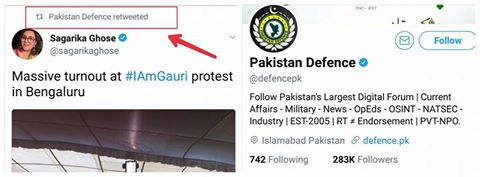
    Why else would a handle called Pakistan Defence be interested in a protest march for a murdered journo in Bangalore?
 21752281_1450597081642432_5108369066076641991_n.jpg
 
   
    This screenshot, I offer without any comments.
 
Captureg.JPG
 
    And before I sign off on this blog post for the time being, just try and recollect the narrative on the incident in Pakistan as well as the ‘secular’ ecosystem within India.
   
    ’nuff said.
 
    Ok, so time to add more this blog post!
 
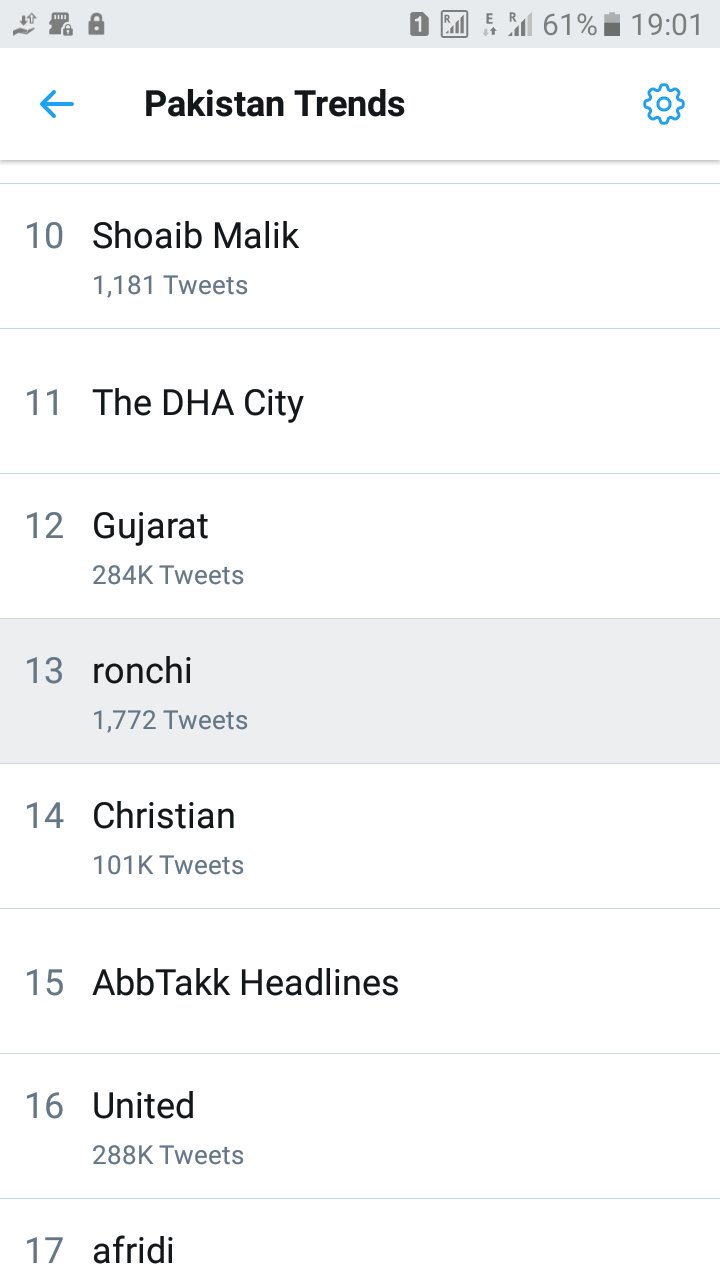
    What is interesting is not that Gujarat was trending earlier in the afternoon of 18 Dec 2017, but the sheer number of tweets – 284k, a figure which should have crossed 300k by now. And this in a country that only had 3.1 million twitter users last year! (source: geo.tv/amp/131187)
 

Looks like I missed this one below while blogging this post!

Btw, the above tweet, when seen in conjunction with the screenshot posted four or five serials above in this blog post, does point to a ‘happy coincidence’, doesn’t it?

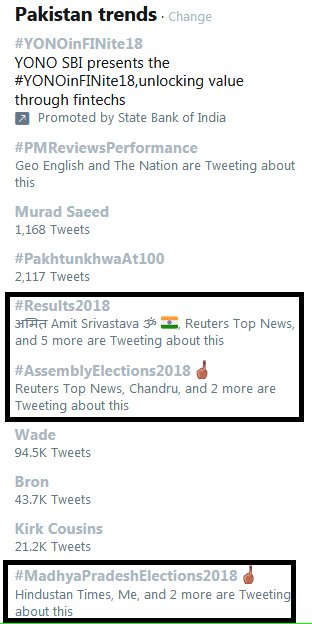
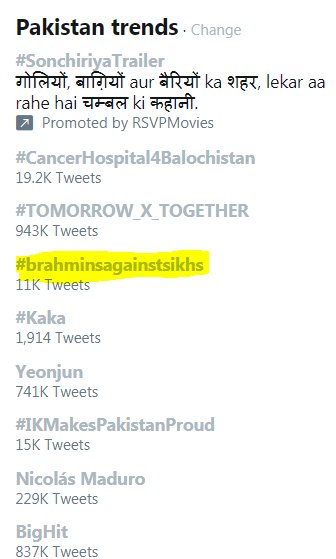
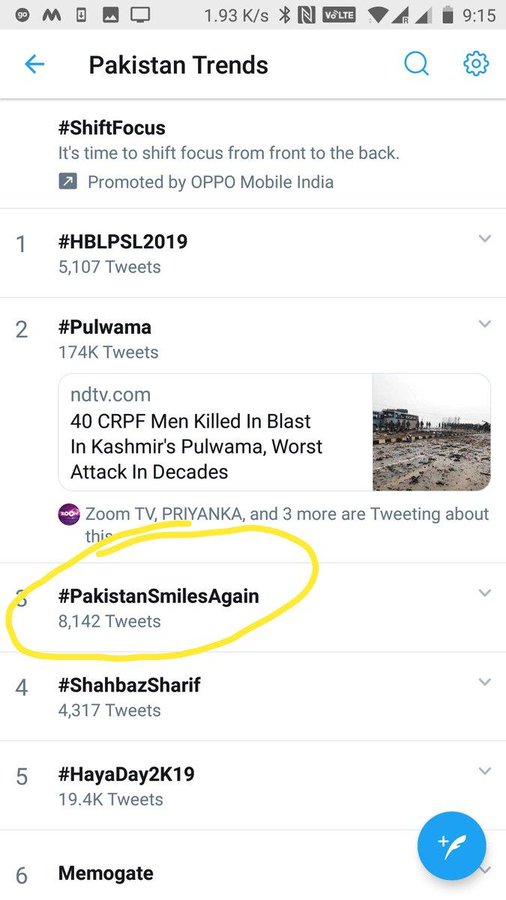
11 Dec 2018: A total of THREE hashtags on Assembly Elections in India trending in Pakistan this afternoon .. I wonder why! Now waiting for a new hashtag with the word ‘Modi’, ‘BJP’ or ‘RSS’ within!

04 Jan 2019: So this was trending in Pakistan today at about 2pm when the govt was replying to the opposition about their allegations on the Rafale Deal. Totally coincidental, no?

10 Jan 2019: A very ‘interesting’ trend right now .. wrt the Kartarpur Corridor. The corridor issue was always a wild herring in middle of election season in India. And they say Khalistanis have no connection with Pakis whatsoever!

Just plugging this tweet here in this blog post before moving ahead:-

These are the two screenshots from the above tweet :-


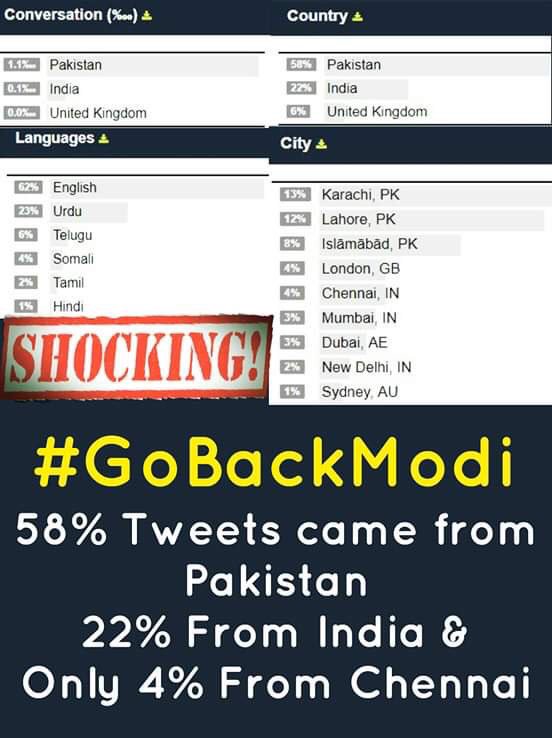
14 Oct 2019: So the Prime Minister of India travels to a South Indian state for a summit with the Chinese President. And #GoBackModi tweets start greeting him. But get what, most of such tweets emanate from Pakistan!


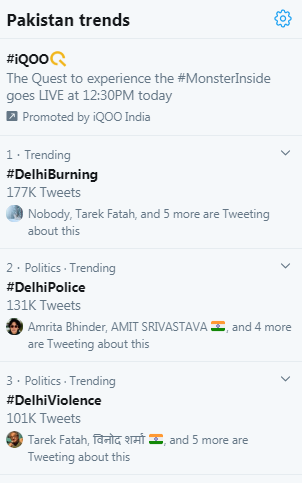
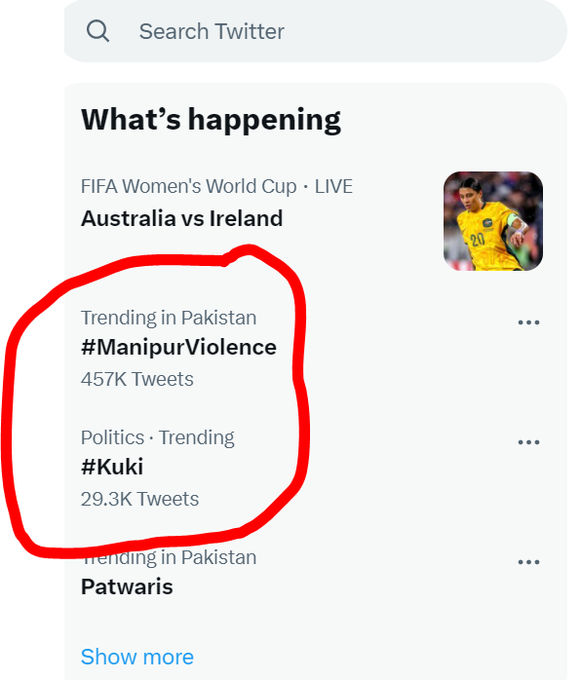
25 Feb 2020: So Delhi sees communal violence and Voila .. the TOP THREE trends in the Land of the Pure get dedicated to that!! Now pl tell me there is no ‘moral’ support from across the borders to the instigators – both online as well as those on the streets.

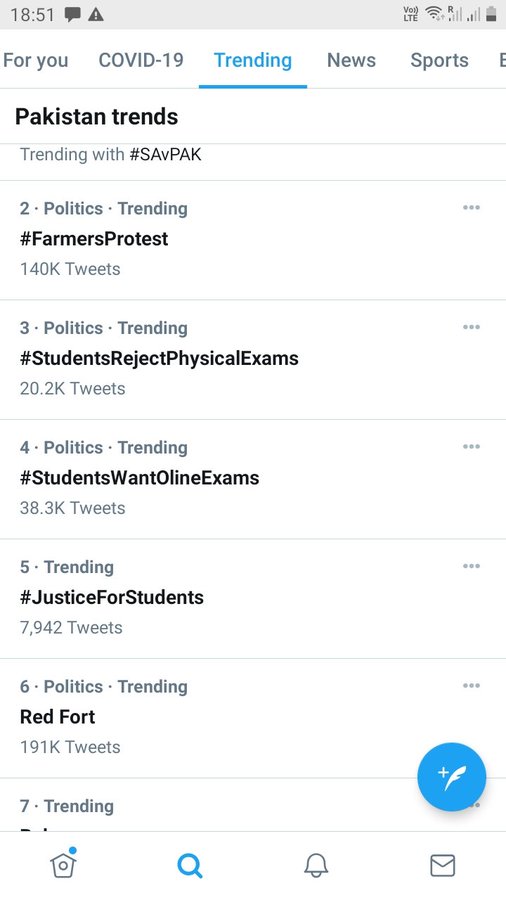
26 Jan 2021: With all that happened in Delhi today, the 2nd & 3rd highest trending hashtags in Pakistan are no surprise, including the sheer numbers of tweets with them – pretty large for a country with hardly 3 million twitter users! Enemies within & enemies outside as a tag-team!

27 Jan 2021:

And it continues .. not just the hashtags, but the sheer numbers of tweets as well. Now if you tell me that it is a mere coincidence, then I have a red coloured building in Old Delhi to sell to you. Packies and Khalistanis are the two sides of the same coin. Period.

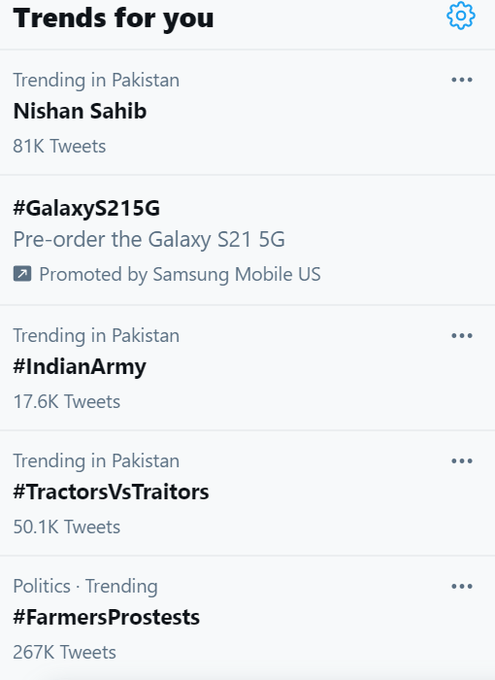
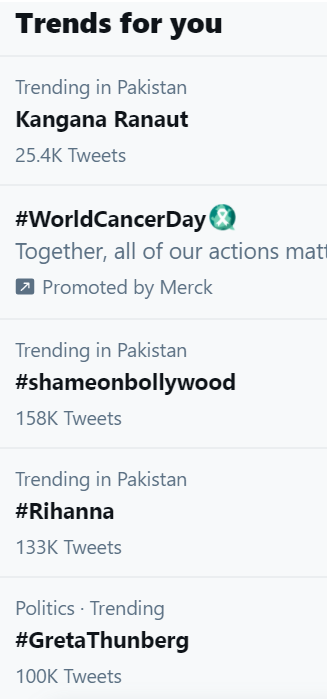
04 Feb 2021: TOP FOUR trends in Pakistan – all related to the ongoing Farm Bills ruckus.

Surprised?

Nope, I’d say!


14 May 2021:   Yup. Narendra Modi is the PAKISTANI Prime Minister!

Don’t believe me? Well, all those Paakis crying for his resignation not too long ago, on 29th April 2021, cannot be wrong no?

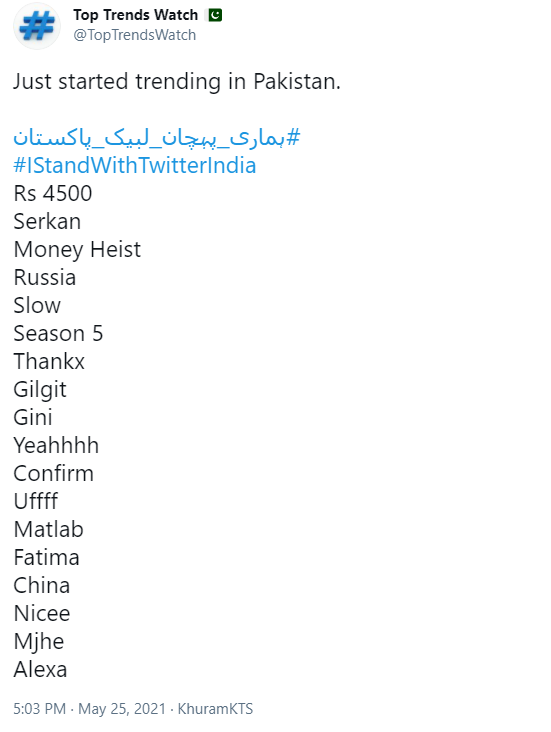
25 May 2021: Quite ‘amusing’ to see Packies standing in solidarity with Twitter India, no? Or are they merely fanning the flames? Well, your call!!


09 Feb 2022: So in the midst of the school uniform fracas in the Indian State of Karnataka, guess what trends in the Land of the Pure – yes, something totally related! Adding fuel to fire!


12 May 2022: OH NO .. #ReleaseYasinMalik is trending at No 1 in Pakistan!

Lucky guy, looks like he is about to get released soon! 🤣

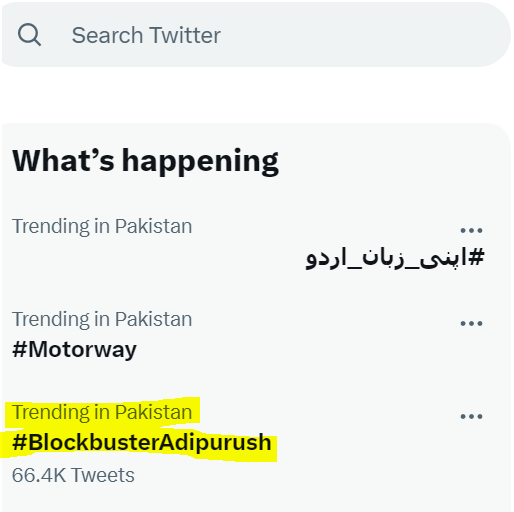
18 June 2023: NEVER failing to meddle in internal issues of India, guess what is trending in Bhikharistan today!!


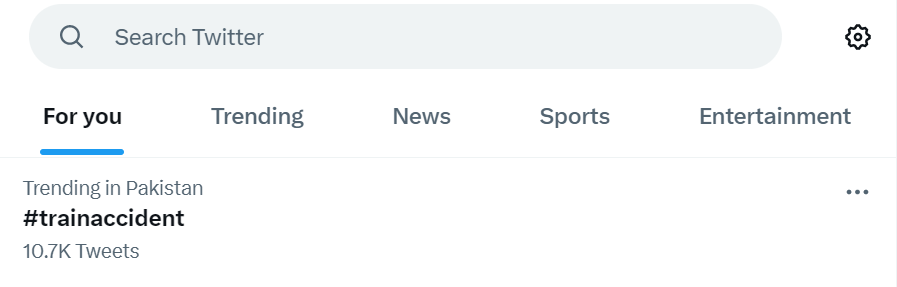
25 June 2023: Two freight trains collide and derail in India .. And THIS starts trending in the Land of the Pure!


20 July 2023: Bhikharistanis are unable to afford even atta for themselves, but will NEVER let that prevent themselves from diverting their meagre resources towards fanning flames in the neighbourhood!

’nuff said!


03 Feb 2024: Bhikharistani keyboard ‘warriors’ are salivating at having trended yet another ‘Indian’ Hashtag at the top of the trend charts, though inside Pakistan!


The Bloody Battle of Sabraon

Ca2kkkMUsAAfHq9.jpg


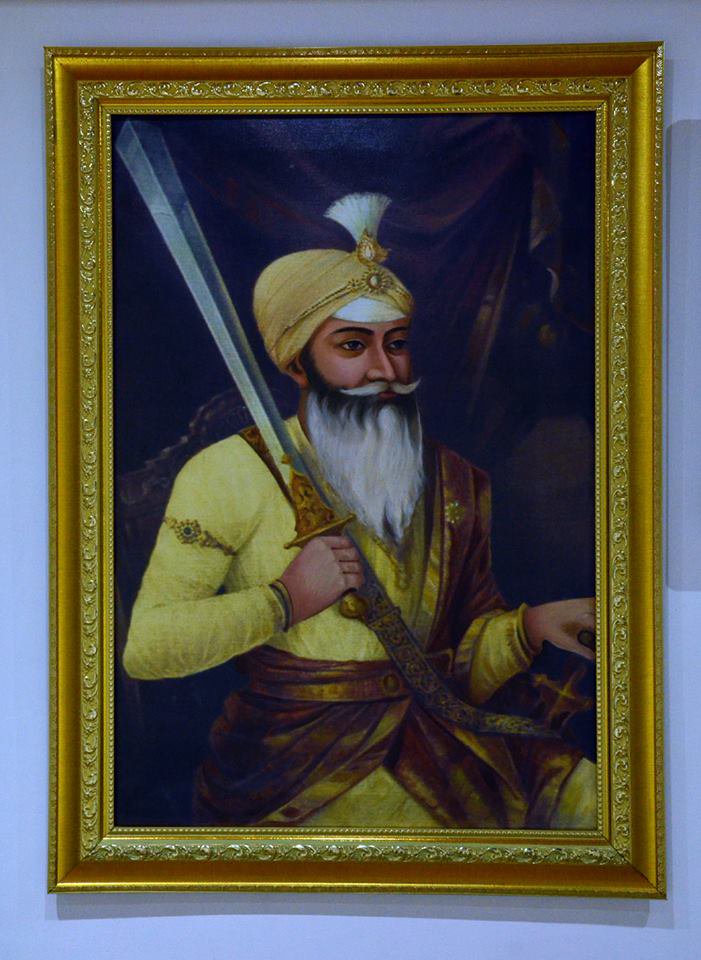
     10 Feb 1846 – A 60yr old Khalsa General, Sham Singh Attariwala donned white clothes depicting the pure attire of one devoted to death, as he rode into what he knew was his last battle. Some time earlier, he had dismissed his servants and told them to return to his village with orders to tell his family that he would not be coming home.

     Mounted on his sturdy white horse,Sham Singh spurred forward at the head of his Khalsa contingent, into the ranks of the 50th Regiment of the British army facing him. The Khalsas fought like men possessed, in a battle for the future of their very lands. Ironically, Sabraon and nearby areas were the scene of another epic battle some two millennia ago when Alexander, in his lust to reach the rich lands of India, fed by life giving waters of its holy rivers, clashed with the native armies under similar circumstances.

     Ca2pEg5VAAEcuHq.jpg

     The battle was a bloody affair. No quarters were asked for, and none were given. Grossly outnumbered, the Khalsas gave an excellent account of themselves. However, at a critical stage of battle, Misr Tej Singh fled back across the Sutlej with his men, destroying part of the bridge in his wake. Far from being disheartened by this treachery, Sham Singh, along with the last 50 of his men made a spirited charge against the advancing British army.

     Needless to say, each and every one of the Khalsas were martyred. In the words of Andrews Adam, “Thus saw the Battle of Sabraon the basest treachery of all opportunists on one hand, and the shining heroism of noble patriots on the other.” Unquote.

     In the evening, after the battle was over, Sikhs swam across the river and recovered Sham Singh Attariwala and his men’s bodies. The General’s mortal remains were found ‘where the dead lay thickest.’ The victors too were suitably awed by this ferocious enemy.

     JD Cunninghan wrote, “Gradually each defensible position was captured & the enemy was forced towards the river; yet; although assailed from all sides, no Sikh offered to submit, and no disciple of (Guru) Gobind (Singh) asked for quarter They,everywhere, showed a front to the victors, and stalked slowly and sullenly away, while many rushed singly forth to meet assured death by contending with a multitude. The victors looked with solid wonderment upon the indomitable courage of the vanquished, and forebore to strike when the helpless and the dying frowned unavailing hatred.” Unquote.

     Hugh Gough, the British commander-in-chief, under whose leadership the two Anglo-Sikh wars were fought, described Sabraon as the ”Waterloo” of India. Paying tribute to the gallantry of the Sikhs, he said: “Policy precluded me publicly recording my sentiments on the splendid gallantry of our fallen foe, or to record the acts of heroism displayed, not only individually, but almost collectively, by the Sikh sardars and the army; and I declare were it not from a deep conviction that my country’s good required the sacrifice, I could have wept to have witnessed the fearful slaughter of so devoted a body of men“. Unquote.

     Lord Hardinge, who saw the action, wrote: “Few escaped; none, it may be said, surrendered. The Sikhs met their fate with the resignation which distinguishes their race” Unquote.

     The Khalsas planted a standard on the battlefield that day which stands even today. Assured victory was turned into defeat by the treachery of one of our own. Else the history, and the present of this nation might have been much different. Sham Singh Attariwala was cremated at his native village on 12 Feb 1846.

Shah Mohammed immortalized Sham Singh and his men’s last stand as:

     ‘They squeezed the blood out of the Whites

     As one squeezes juice out of a lemon

     If only Ranjit Singh were there,

     He would have been proud to see, 

     How the Khalsa wielded their swords.

     Oh Shah Mohammad, without Ranjit Singh, such was our plight

     We won the battles, but lost the fight.

Unquote

Ca8DIyzUkAE-3ca.jpg
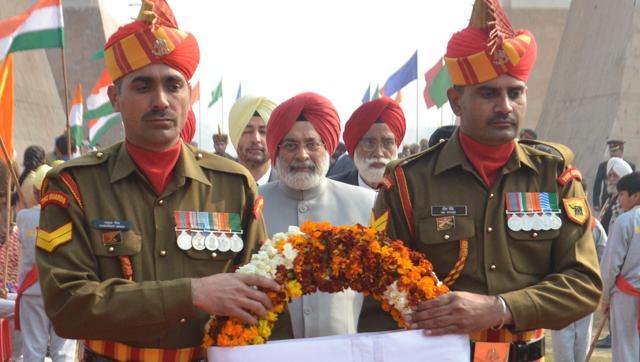
Former COAS, Gen JJ Singh pays respects to Gen Sham Singh Attariwala on his martyrdom anniversary, Amritsar, 10 Feb 2016
Ca2ypPuUAAI4SW7.jpg
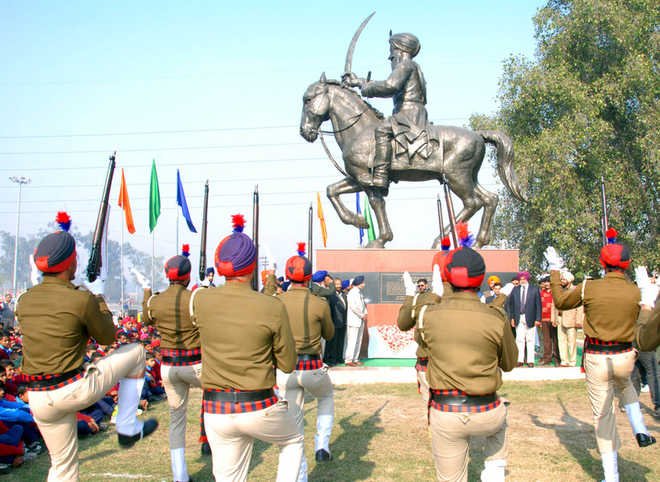
Punjab Police pays tributes to Gen Sham Singh on his 169th martyrdom day at India Gate, Amritsar, 2015.